














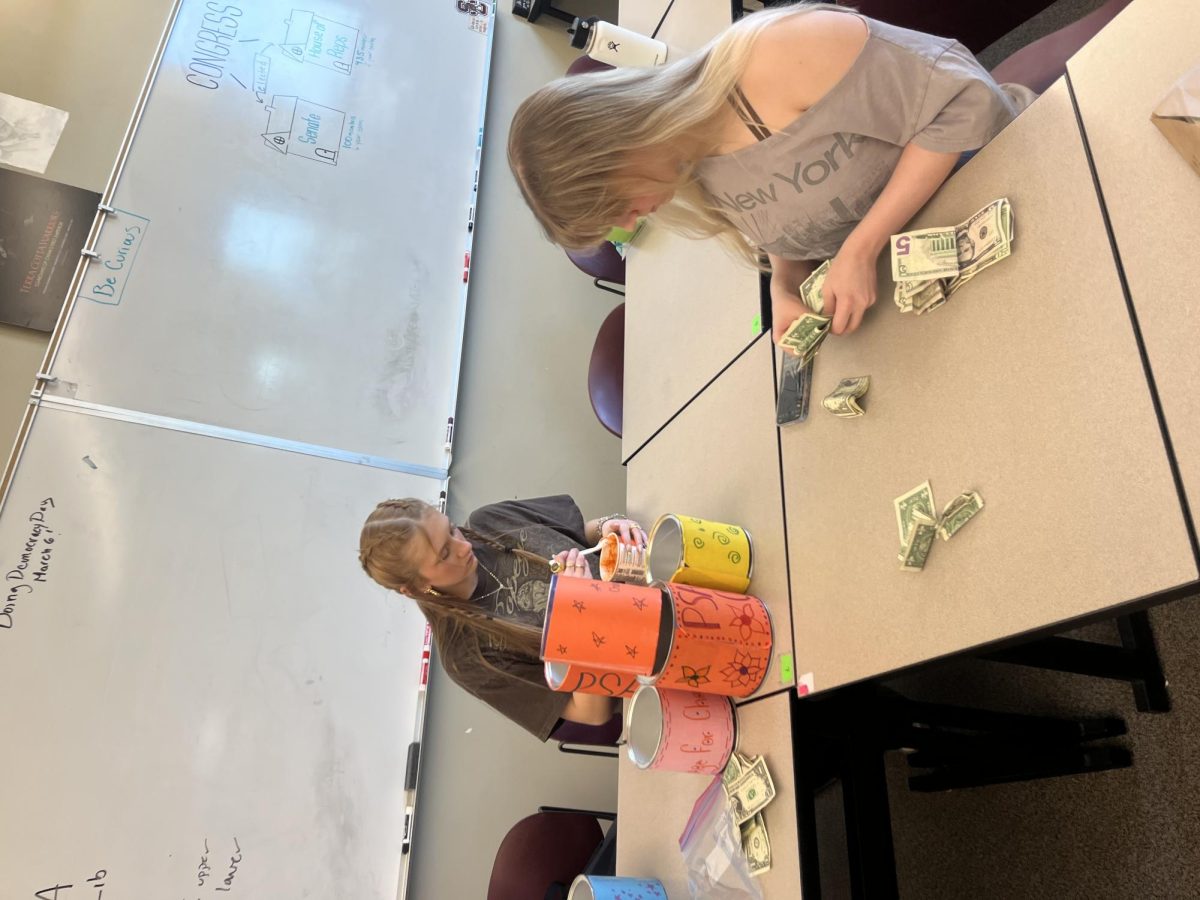
![Hosting the SCLA Casptone Mentor Dinner outside allowed for more attendees on September 27, 2021 at Silver Creek. This event would’ve usually been held inside. According to Lauren Kohn, a SCLA 12 teacher, “If we have a higher number of people, as long as we can host the event outside, then that seems to be keeping every[one] safe”.](https://schsnews.org/wp-content/uploads/2021/11/sxMAIGbSYGodZkqmrvTi5YWcJ1ssWA08ApkeMLpp-900x675.jpeg)

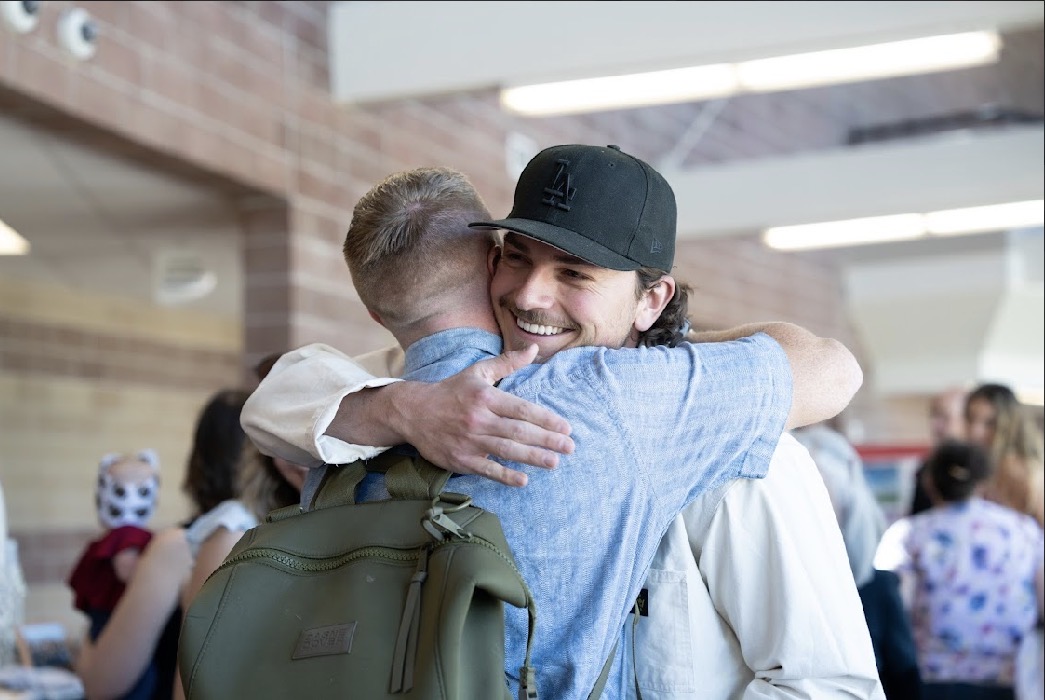
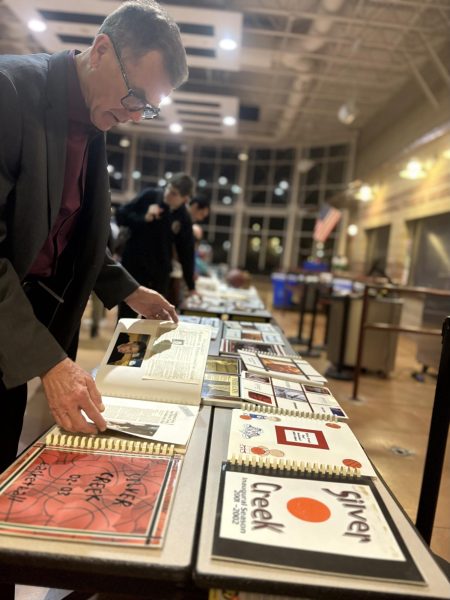
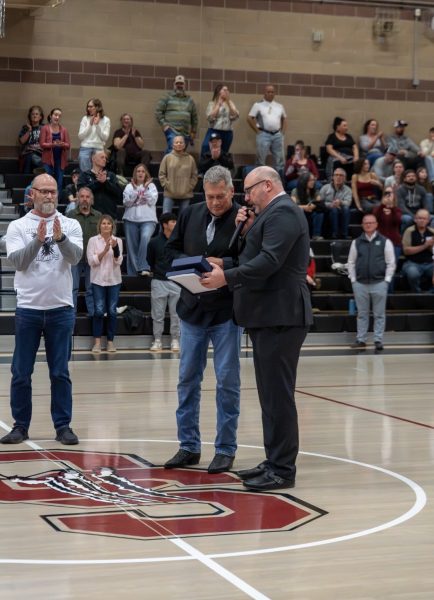
The cafeteria at Silver Creek High School filled with the noise of celebration as former players, colleagues, families, and community members gathered to honor the basketball coach who had changed so many of their lives. The tables were lined with trophies, yearbooks, newspaper articles, and many more momentos. It was February 6 and Bob Banning just watched his basketball team beat Niwot High, the same school where his coaching career began more than 25 years ago.
During this celebration, people Banning had connected with spoke about him; there were past and current athletes, co-workers, family members, and anyone he had connected with in the community.
However, the road that led Banning to Silver Creek was anything but straight.
Banning’s education started at Poudre High School in Fort Collins and continued at Colorado State University (CSU). He was on both the track and basketball team, but he found his love for basketball and left track behind.
Originally, when thinking about life after college, Banning wanted to be a forest ranger, but when he spoke to a basketball coach at his old school, he was inspired to pursue teaching. He went back to college and got an Administration Degree in Education and became a biology teacher.
His teaching path started as a student teacher at Niwot High School, then eventually he became the JV coach at Niwot while also substitute teaching. Niwot eventually had a part-time position open up, and Banning was then hired back as a full-time teacher, where he also took the role of the head boys’ tennis coach. Taking coaching even further, he stepped into the position of assistant track coach and assistant basketball coach. Banning was then offered to help open Silver Creek High School in 2001.
Banning’s 25 years at Silver Creek have left a mark on nearly everyone in the room. However, after the 2025-2026 school year, he will be retiring from his coaching career.
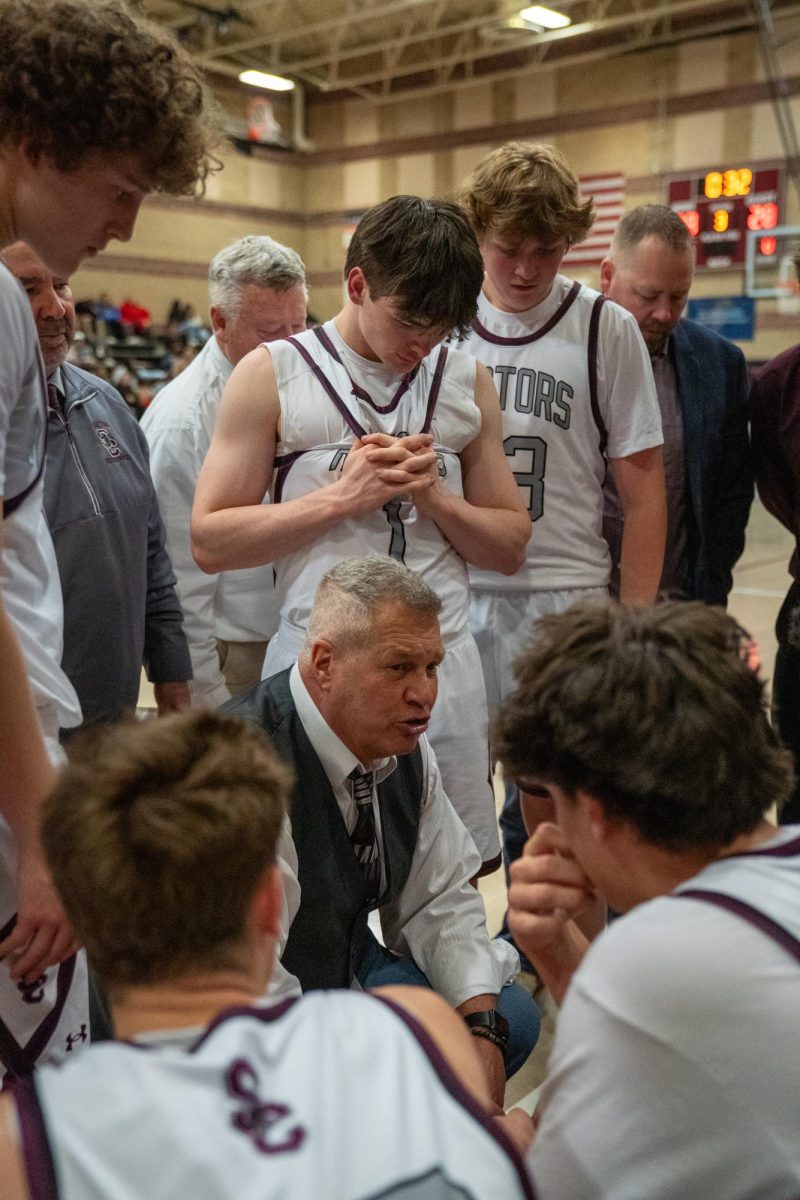
At the center of everything, Banning builds is a two-word philosophy that all his players can recognize without hesitation: the “Gentleman Warrior” motto.
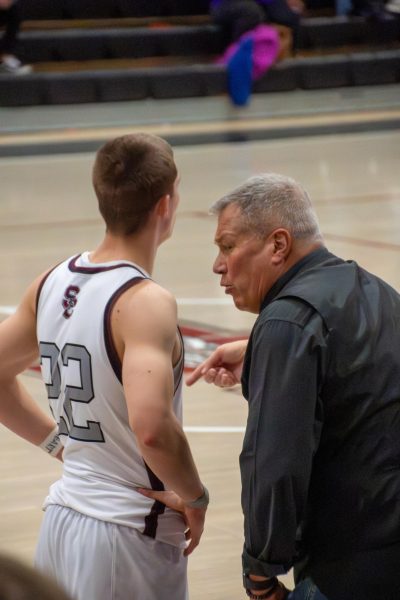
“The [phrase gentleman warrior] means that you can be a gentleman all that time and take care of yourself, take care of other people, but then it’s time to fight,” Luke Schmeeckle, a senior, who has played for Banning for four years, said.
Banning wanted the phrase to capture something more nuanced than just toughness. It is about knowing when to be gracious and when to compete with everything you have.
“If you take a phrase that means gentleman or ladylike or whatever you would think is a polite way of acting in our [society], but also be the good guys that win,” Banning said.
Banning crafted the phrase and has stuck to it throughout his coaching career. The motto has become a foundation of his program, shaping the culture and mindset of every player he has coached.
“That was a phrase that I just came up with, that I thought was a humbling way and also an intense way to share values with people,” Banning said.
That philosophy has left a lasting impression on those who have been coached by him.
David Foster, who played for Banning at Niwot High School, was among the audience at the celebration after the game.
“He’s a man of great honor, but he’s also competitive, and that’s where the warrior part comes in,” Foster said.
Waylend Harris played on Junior Varsity Basketball (JV) at Silver Creek and coached for eight years with Banning.
“He’s giving me a lifetime of memories, one of my favorite guys of all time,” Harris said.
Eric Grimes had Banning as both a coach and a Biology teacher at Silver Creek. He attended the celebration alongside Mike Grooms, who attended school with Grimes. Banning gave the nickname “Rooster” to Grooms from his love for hunting.
“I didn’t have that kind of figure, so [Banning] kind of stepped in and kept a good eye on what Eric and Rooster were doing,” Grimes said. “He was always there, too. He kept us out of trouble.”
That balance of toughness and care left a lasting mark on the players who came through his program. For many, it was the kind of push they didn’t even know they needed.
“He was hard on us, but it really paid off, at least [in] my life in high school,” Grimes said.
However, Banning’s influence didn’t stop at those who showed up that night; it stretched into the hallways and classrooms of Silver Creek itself. Those who played for him carried those lessons long after their final game.
Christian Warner, the Silver Creek Campus Advisor, played for Banning when he attended Silver Creek; however, he started connecting with Banning more when attending basketball youth camps. Warner started to play for Banning during his sophomore year and was the team captain his senior year. After graduating, Warner came back to the Silver Creek coaching staff as a volunteer assistant.
“[Banning’s] well aware of everything as far as in the school building and what goes on here basketball related,” Warner said. “He’s a very open source to be able to dive into and get any information that you need.”
For Warner, that intelligence translated directly into how he now approaches his own role on the coaching staff. Returning as a volunteer assistant wasn’t just a way to give back, but also a way to continue working with the person who shaped him.
“He’s so knowledgeable,” Warner said. “[Banning has] so much wisdom and not necessarily taken for granted, but he’s pretty much got an idea through experience and not to navigate certain situations.”
A quality that Schmeeckle admires about Banning is his accountability, not just for others but for himself as well.
”[Banning has] influenced me in more ways than I even thought, just being able to hold myself accountable for being a basketball player, but more importantly being a good person and cleaning up after myself, making sure all of the equipment is nice and taken care of,” Schmeeckle said.
There is a sense of accountability that players say reflects something deeper that Banning instilled, a responsibility to the program and the community long after the final buzzer of a game. It’s a standard that Warner, now on the other side of the clipboard, feels personally obligated to uphold.
”Wanting to give back to the community, being part of the community, and wanting to continue the legacy that he’s embedded in the last 25 years is something that I take very seriously,” Warner said.
Warner sees that carrying that mission forward is his own obligation now; the values Banning built into the program don’t retire with the coach.
“It’s about our guys and ensuring that they’re outstanding students in the classroom, in the community, and giving back to the community,” Warner said.
Banning sees the relationships built through the sport as the real reward of a long career. For him, it was not always about the wins and the losses.
“I think you get to know more about people when you have a chance to see them and feel their energy,” Banning said.
For Banning, those ungraded moments really show what coaching is really about. There are areas where the team is able to show itself, for example, in the locker room.
“[The] locker room for a team sport should always be a wonderful place, win or lose,” Banning said. “I think the emotions are real, and you get to see people for who they really are.”
The impact that Banning has made has extended far beyond the basketball court. Those who knew Banning as both a coach and a teacher say the two roles were never really separate.
“He’s built everything [for basketball],” Schmeeckle said. “He retired [from his teaching position] before I got here, but I know that he was pretty influential as a teacher, and he always does a great job in whatever area he works in.”
Banning’s respect for community ran in every direction. To him, every person in the building played an equal role in making the school what it is today.
“Everybody in the high school, from the janitors to the secretaries to teachers to paras, cooks, they’re all important,” Banning said.
The sense of collectiveness is not limited to one place, however extended beyond the classroom and the court. Those who know Banning can say that that feeling of unity defines everything he’s built over the years.
“[Banning’s legacy is] not about the basketball, but it’s more about the people that he’s helped and, like on the retirement game, he had a bunch of former players, and former people that he influenced,” Schmeeckle said. “That’s the biggest [thing], is the community inside a community that he’s built for years.”
Now, as Banning prepares to retire from Silver Creek to move to Colorado Springs in order to be closer to his children and grandchildren, the players he shaped are left to defend what he leaves behind. By most accounts, the answer to his legacy had little to do with basketball.